Somewhere between the accepted offer and the closing table, most Pelican Bay buyers meet a number they did not budget for. It shows up in the estoppel package, printed next to the community's annual assessment: a $10,000 resale capital assessment, paid by the buyer, due at closing. It is not something your agent can talk the seller into splitting. It is not listed on the MLS sheet. And it is only the beginning of a cost structure that makes Pelican Bay behave differently from almost every other beachfront address in Naples.
If you have been comparing Pelican Bay's median price against Park Shore or the Moorings and treating it as an apples-to-apples number, this is the piece that changes that comparison.
The median price is doing less work than it looks like
Over the three months ending in June 2026, the median sale price in Pelican Bay sat at $1.5 million, down 3.8 percent from the same period a year earlier, with price per square foot at $622, down 4.2 percent year over year, according to Redfin's July 2026 market data. Days on market stretched to an average of 70 in the twelve months ending June 2026, up from 63 the year before.
Those numbers describe the sticker. They do not describe what you actually own, what you pay every quarter after closing, or why your neighbor two towers over might be carrying a very different monthly bill for a floor plan that looks identical on a listing photo.
Here is the part that a median can never capture: in Pelican Bay, ownership runs through four separate cost layers, and the fourth one is different for every building in the community.
Four bills, one address
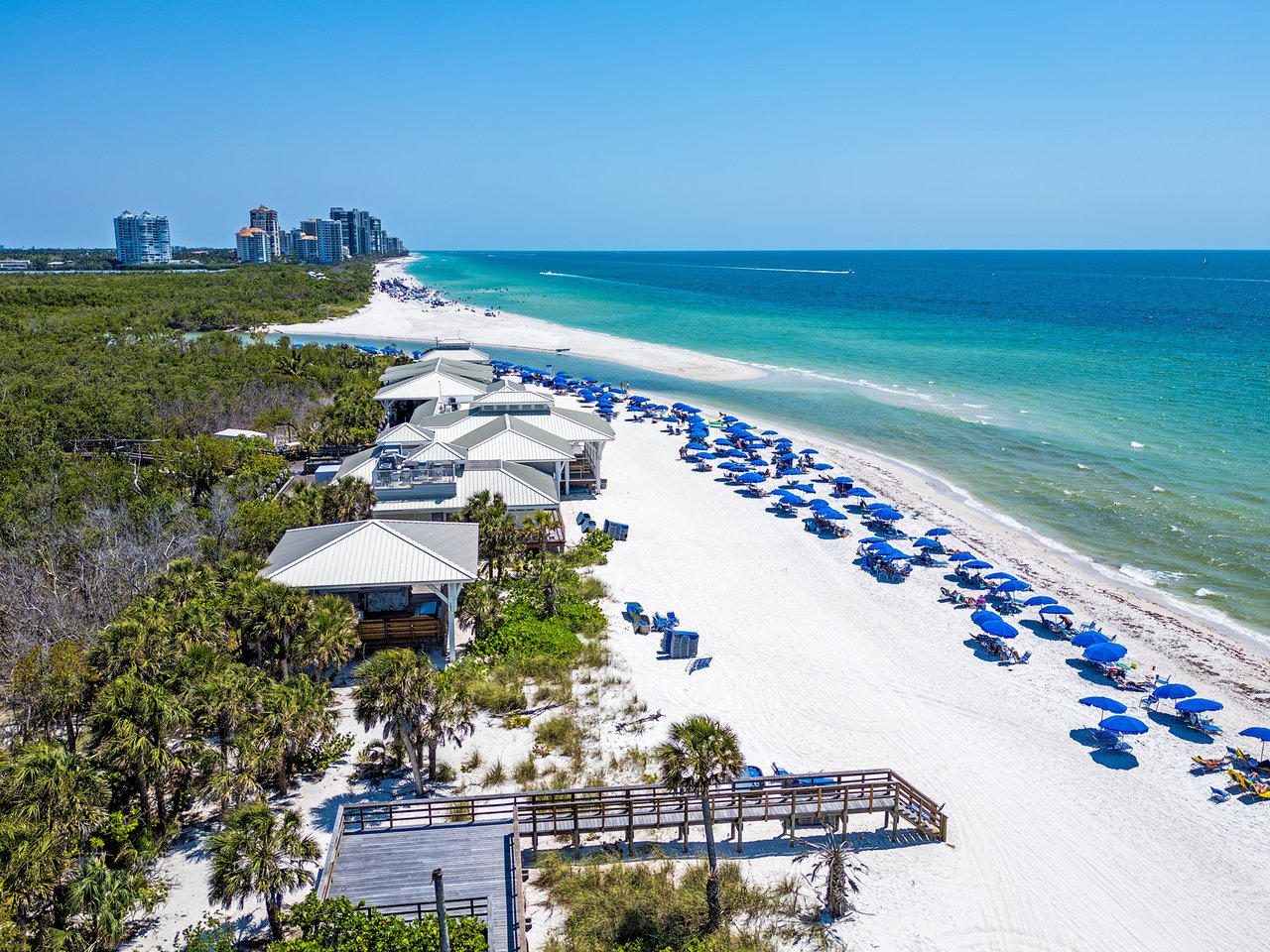
The first layer is the Pelican Bay Foundation's annual assessment. For fiscal year 2026, that figure is $3,295, billed quarterly at $823.75. Membership is mandatory for every property owner in the community, and it funds the amenity system Pelican Bay is known for: nearly three miles of private beach, the tram system that carries residents through the mangroves to the sand, two tennis complexes, a fitness and wellness program, and beachfront dining. You can find the governing documents behind these assessments through the Foundation's own realtor resource page.
The second layer is the one that catches people off guard: the $10,000 resale capital assessment, paid by the buyer at closing on every resale transaction. It funds capital projects across the community rather than any one building. There is a narrow exception. An existing Pelican Bay owner purchasing a second property inside the community may qualify for a one-time waiver, but that requires review under the Foundation's own member guide during escrow, not a conversation at the negotiating table.
The third layer sits on the property tax bill rather than in a homeowner association ledger. The Pelican Bay Services Division, a Collier County municipal taxing unit, levies its own non-ad valorem assessment for streetscapes, stormwater management, and Clam Bay preservation. That charge is separate from anything the Foundation collects and separate from any building dues.
The fourth layer is where the real variation lives. Pelican Bay is not one association. It is roughly 95 distinct condominium and homeowner associations spread across a community of about 6,500 residences, and each one sets its own budget, staffing model, and reserve schedule. The Foundation assessment and the PBSD line are identical no matter which building you buy into. The building HOA is not, and that single variable can separate two otherwise comparable units by a meaningful monthly gap.
Same community, different math
A buyer comparing two Pelican Bay listings at the same price point is often comparing two entirely different service models wearing the same zip code.
Building | Profile | What drives the difference |
|---|---|---|
Marbella | Concierge service, formal and informal dining rooms, room service, on-site fitness, and a beauty and barber shop | A hospitality-level staffing model built into the dues |
Serendipity | 66 Gulf-side units with its own pool and clubhouse | A leaner, smaller-scale operating budget |
Calais | 131 residences built in 1992, self-managed board | Moderate scope, fewer shared amenities to fund |
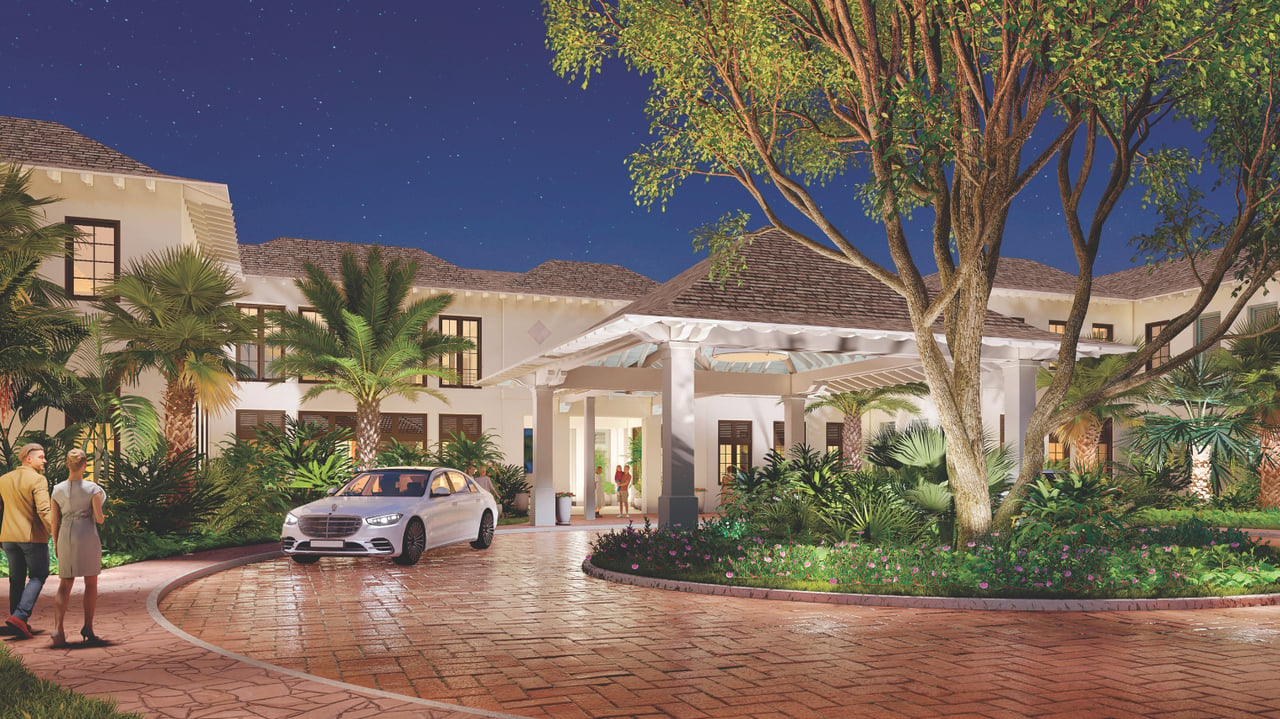
The Stratford | A 22-story tower of 81 residences at the community's southern edge, walking distance to the beach tram, Waterside Shops, and Artis-Naples | High-rise infrastructure and staffing costs baked into the association |
None of these buildings changes what the Foundation or the county charges. All of them change what the building itself charges, and that number rarely appears until a buyer requests the association's financials and reserve study, well past the point of writing an offer.
Golf has nothing to do with any of this
One assumption trips up more buyers than any fee schedule. Owning property inside Pelican Bay does not include golf privileges. Club Pelican Bay, with its 27 holes of championship golf and a 50,000 square foot clubhouse completed in 2017, is a separate, privately owned club with its own application, initiation fee, dues structure, and waitlist. A Pelican Bay closing transfers Foundation membership, meaning beach, tram, tennis, and fitness access. It transfers nothing at the golf club. Buyers who want both need to plan for two entirely separate applications, and the timeline on the club side can run well beyond the closing date.
What a slower market actually buys a prepared buyer
The rising days-on-market figure and the softer year-over-year pricing are not simply signs of a cooling neighborhood. They are also room to negotiate, and recent large transactions show how much room. Market reports from early 2026 recorded a $6.4 million Pelican Bay single-family sale closing at 93 percent of list in March, a $12.125 million estate closing at 93 percent in January, and a $9.8 million condo closing at 90 percent in January. On properties in that range, the gap between 90 and 93 percent of list is not a rounding error. It is real money, and it tends to go to the buyer who arrived at the negotiating table already knowing the full cost stack rather than discovering it in the estoppel.
That is the actual lesson underneath all of these numbers. A seller who discloses the Foundation assessment, the resale capital charge, the PBSD line, and the specific building's HOA budget upfront sells to a better-prepared buyer and usually closes at a tighter list-to-sale ratio. A buyer who waits until estoppel to do that math is negotiating from a weaker position, because by then the seller already knows the number the buyer is about to see for the first time.
A few questions worth asking before you write an offer
Is the $10,000 resale capital assessment negotiable between buyer and seller? No. It is set and collected by the Pelican Bay Foundation at closing, not a term that moves in a purchase contract, though a limited exemption exists for owners moving within the community.
Does owning in Pelican Bay include Club Pelican Bay golf? No. Golf membership is a separate, private arrangement with its own application, initiation fee, and dues, independent of any property purchase.
Do all Pelican Bay buildings charge the same HOA dues? No. The Foundation assessment and the PBSD tax line are consistent community-wide. Building dues vary widely across the roughly 95 associations, based on each building's staffing, amenities, and reserve funding.
Pelican Bay rewards buyers who read past the median, and it penalizes the ones who don't find out what a building actually costs until the numbers are already locked in. Building-by-building fee comparison is not a footnote in this market. It is the market.
If you are weighing a purchase or a sale in Pelican Bay and want the full cost picture on a specific building before you write an offer or set a list price, The Beachfront Team can walk you through it. Experience the Beachfront Difference: schedule a confidential consultation.