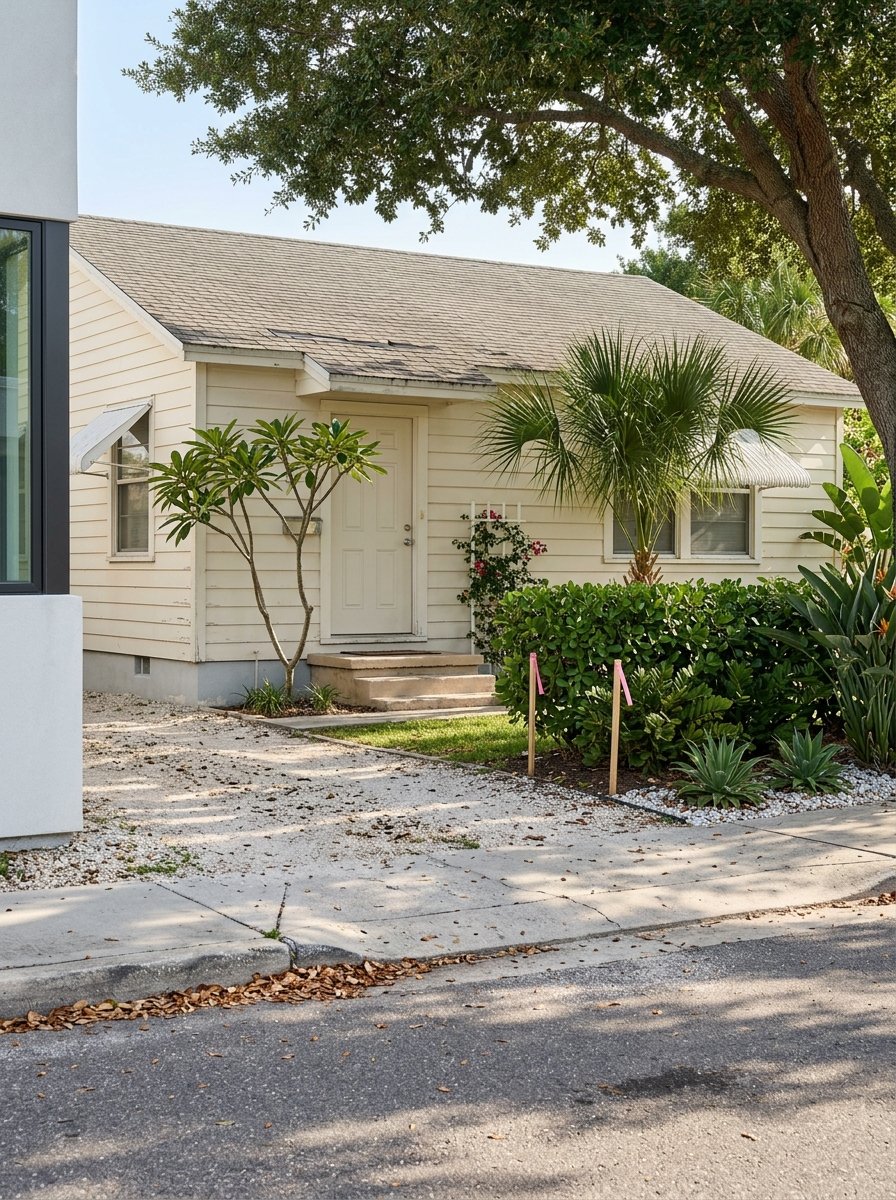
If you have your eye on an Olde Naples cottage, you are probably not just competing for a charming house. You may also be competing for the lot, the redevelopment potential, and the ability to navigate a tightly regulated coastal market. That can make these properties feel exciting, complex, and hard to judge at first glance. In this guide, you’ll learn how to think about cottage value, teardown potential, flood and historic review, and what makes an offer stronger in Olde Naples. Let’s dive in.
Why Olde Naples cottages draw fierce interest
Olde Naples is the City of Naples’ original-home pocket, with many homes dating back to near the turn of the century alongside newer construction. That mix is part of what makes the area so compelling. It also means older cottages can carry value as livable homes, renovation candidates, or future building sites.
In practical terms, buyers are often evaluating two assets at once: the structure and the underlying land. A small house may look modest, but the lot itself can be a major part of the purchase decision. In a market like Olde Naples, understanding which of those two elements is driving value can help you avoid overpaying or overlooking a real opportunity.
Know whether you are buying house or land
Before you make an offer, it helps to answer a simple question: are you buying a cottage to keep, or a parcel to transform? That question shapes almost every decision that follows, from financing to inspections to renovation planning. It also changes how you compare one property to another.
Collier County’s Property Appraiser separates land from improvements and values parcels annually as of January 1. The county’s property search can show property summaries, sketches, aerials, and other details that help you understand how a property is being viewed from a valuation standpoint. For an older home in Olde Naples, those records can offer an early clue about whether the value sits mostly in the structure, mostly in the land, or in both.
Start with address-based due diligence
A strong search process usually starts with public records tied to the specific address. That includes county property records, city permit history, flood status, and whether the property sits inside the Naples Historic District. These checks can sharpen your strategy before you spend time and money chasing the wrong type of property.
The City of Naples permit portal can also help you see permit status, work descriptions, contractor information, and whether permits are pending, issued, finaled, expired, or still in plan check. That history matters. If an older cottage has already absorbed major work over time, your renovation path may look very different than it would on a largely untouched home.
Flood rules can change the math fast
In Naples, floodplain review is central to permitted development. The city states that almost all permitted development requires floodplain review. If a property is in a Special Flood Hazard Area, including zones A or V, and sits below the required flood elevation, local floodplain regulations and state code can come into play when you remodel, renovate, add on, or reconstruct.
One number matters more than most: 50%. The city defines substantial damage and substantial improvement at the 50% threshold. If your project crosses that line, the structure must be brought into compliance with flood regulations, including elevation to or above base flood elevation.
That is a major reason some quaint cottages are not simple cosmetic projects. A renovation that looks manageable on paper can become far more expensive if the scope of work triggers full compliance requirements. For buyers weighing a cottage versus a teardown, this is often one of the biggest decision points.
Insurance and flood status matter early
Flood status is not something to leave for the end of the transaction. Collier County notes that flood insurance is mandatory for federally backed mortgages on buildings in a Special Flood Hazard Area. The city also notes that standard homeowners policies usually exclude flood losses.
That is why many buyers benefit from getting clarity on flood exposure and insurance costs before they fully commit. In a competitive situation, you want to know whether a property’s carrying costs and project costs still fit your plan. A cottage that seems attractively priced can look very different once flood compliance and insurance are part of the picture.
Historic review can affect teardown timing
Olde Naples has another layer that buyers cannot ignore: historic review. The city’s historic-building ordinance defines a historic district in Naples as a National Register-listed district and treats contributing resources within that district as historic buildings for permitting purposes. In plain terms, some older homes are not just old. They may be treated as historic resources during the permit process.
If you are considering demolition, the city requires a building permit for that work. For contributing buildings in the Naples Historic District, city code imposes a 45-day waiting period before permits to demolish or remove them are issued so alternatives can be considered. That waiting period alone can affect your timeline and your closing strategy.
Post-demolition obligations still apply
Demolition is not the end of the city’s involvement. According to the city’s demolition affidavit, if a lot becomes vacant because of demolition, it must be brought back into compliance within 60 days and covered with grass or other living material. That means a teardown buyer needs a plan for what happens immediately after the structure comes down.
For historic buildings in flood hazard areas, the city also states that exterior work, interior work, additions, and demolition must be reviewed by the Florida SHPO before you submit to the city for a permit, though some minor work may be exempt. Taken together, these steps mean a teardown opportunity in Olde Naples is not simply a fast shortcut to new construction.
Renovate or rebuild in Olde Naples?
This is often the central question, and the answer usually depends on cost, timing, and regulation rather than emotion alone. A cottage may feel worth saving because of its scale and character, but the real test is whether the project can remain workable under flood, zoning, and historic rules. If not, the land may be the more important asset.
Naples notes that building additions need planning approval for zoning compliance. Combine that with the city’s flood rules and the 50% substantial-improvement threshold, and you can see why the line between renovation and rebuild matters so much. A property that seems ideal for an addition may, after review, make more sense as a full redevelopment site.
Signs a cottage may lean renovation
A property may be better suited for renovation when:
- The existing structure still supports your goals
- The likely scope of work stays below major flood-compliance triggers
- Permit history suggests the house has been updated in workable stages
- Historic review does not create major obstacles for your intended changes
Signs a property may lean teardown
A property may be more of a land play when:
- The lot is the clear driver of value
- The cottage needs extensive work to meet your goals
- Renovation costs approach or exceed the practical value of keeping the structure
- Flood elevation, historic review, and zoning constraints make a rebuild the cleaner path
Match financing to the project path
Olde Naples buyers often gain an edge by choosing the financing structure that fits the property from the start. A salvageable cottage and a true teardown usually do not belong in the same loan conversation. If your financing is mismatched to the likely project, you can lose time and credibility.
Construction loans are generally short-term loans for building or rehabilitating a home, with funds advanced in stages as construction progresses. They also generally carry higher interest rates than longer-term mortgages. For a true teardown or major rebuild, that staged structure may align better with the project.
For renovation-focused purchases, Fannie Mae says its HomeStyle Renovation mortgage allows a borrower to purchase or refinance a property and include repair funds in the loan, and that the property does not have to be habitable at closing. That can make renovation financing more practical for certain older cottages where the structure still pencils out.
Build a competitive offer carefully
In a market like Olde Naples, speed matters, but so does precision. A strong offer is usually one that reflects the property’s actual path. Sellers can tell when a buyer understands the difference between a cottage renovation and a teardown site.
A preapproval letter can help, but it is not a guarantee. It is also wise to keep the contract aligned with the realities of the property. Guidance from CFPB recommends making the purchase contract contingent on both financing and a satisfactory inspection.
Keep your contingencies real, not careless
In a competitive setting, buyers sometimes feel pressure to strip out every protection. That can be risky with an older coastal property. Inspection, financing, and early insurance review can all reveal issues that change your project cost or timing.
A practical offer strategy often includes:
- Financing that fits the likely renovation or rebuild path
- An inspection contingency that still gives you a real exit if the property disappoints
- Early review of insurance availability and cost
- A quick, address-specific check of permits, flood status, and historic-district implications
Why local guidance matters in Olde Naples
Olde Naples cottages can look simple from the street and become highly technical once you are under contract. Small differences in flood status, permit history, lot value, or historic review can completely change the economics of the deal. That is why buyers often benefit from front-loading the property-specific checks that are available before closing.
For a market this nuanced, you want an advisor who understands how to interpret both the charm and the constraints. The right guidance helps you separate emotional appeal from true opportunity, so you can move with more confidence whether you are buying a cottage to restore or a lot to reimagine.
If you are weighing a cottage purchase, a renovation candidate, or a teardown in Olde Naples, The Beachfront Team offers the local insight and concierge-level guidance to help you evaluate the opportunity clearly and compete strategically.
FAQs
What makes Olde Naples cottages so competitive for buyers?
- Olde Naples cottages can attract buyers who want a livable older home, a renovation project, or the underlying land for future redevelopment, which creates multiple layers of competition for the same property.
What does the 50% rule mean for an Olde Naples renovation?
- In Naples, if a project meets the city’s 50% substantial-damage or substantial-improvement threshold, the structure must be brought into compliance with flood regulations, including elevation requirements.
What should buyers check before offering on an Olde Naples teardown?
- Buyers should review flood status, permit history, county property records, and whether the home is inside the Naples Historic District, since each of those factors can affect cost, timing, and redevelopment options.
How does historic review affect demolition in Olde Naples?
- For contributing buildings in the Naples Historic District, demolition permits are subject to a 45-day waiting period, and some properties in flood hazard areas may also require Florida SHPO review before city permit submittal.
What type of financing fits an Olde Naples cottage purchase?
- The best fit usually depends on the project, with renovation financing often better suited to salvageable cottages and construction financing more appropriate for true teardowns or major rebuilds.