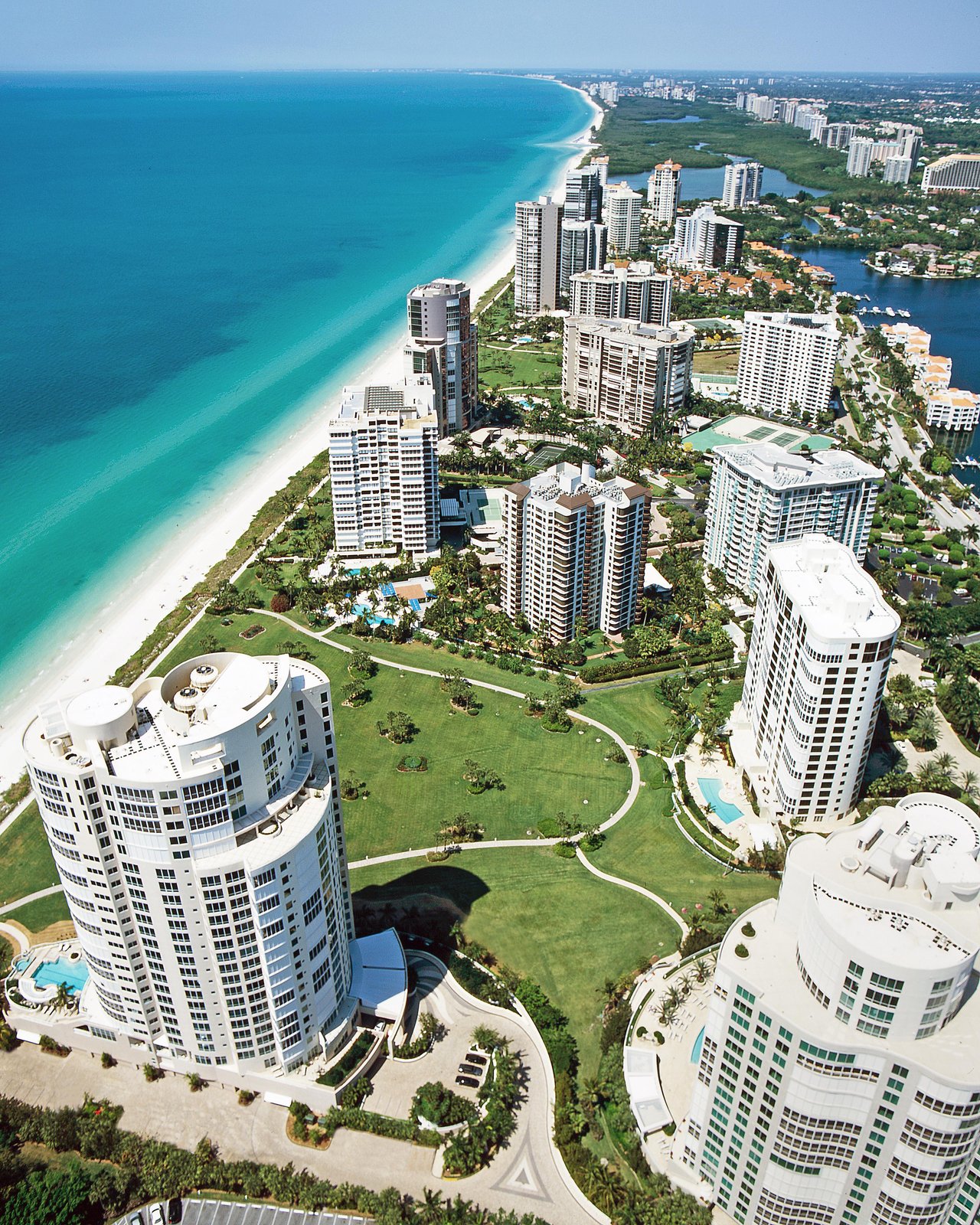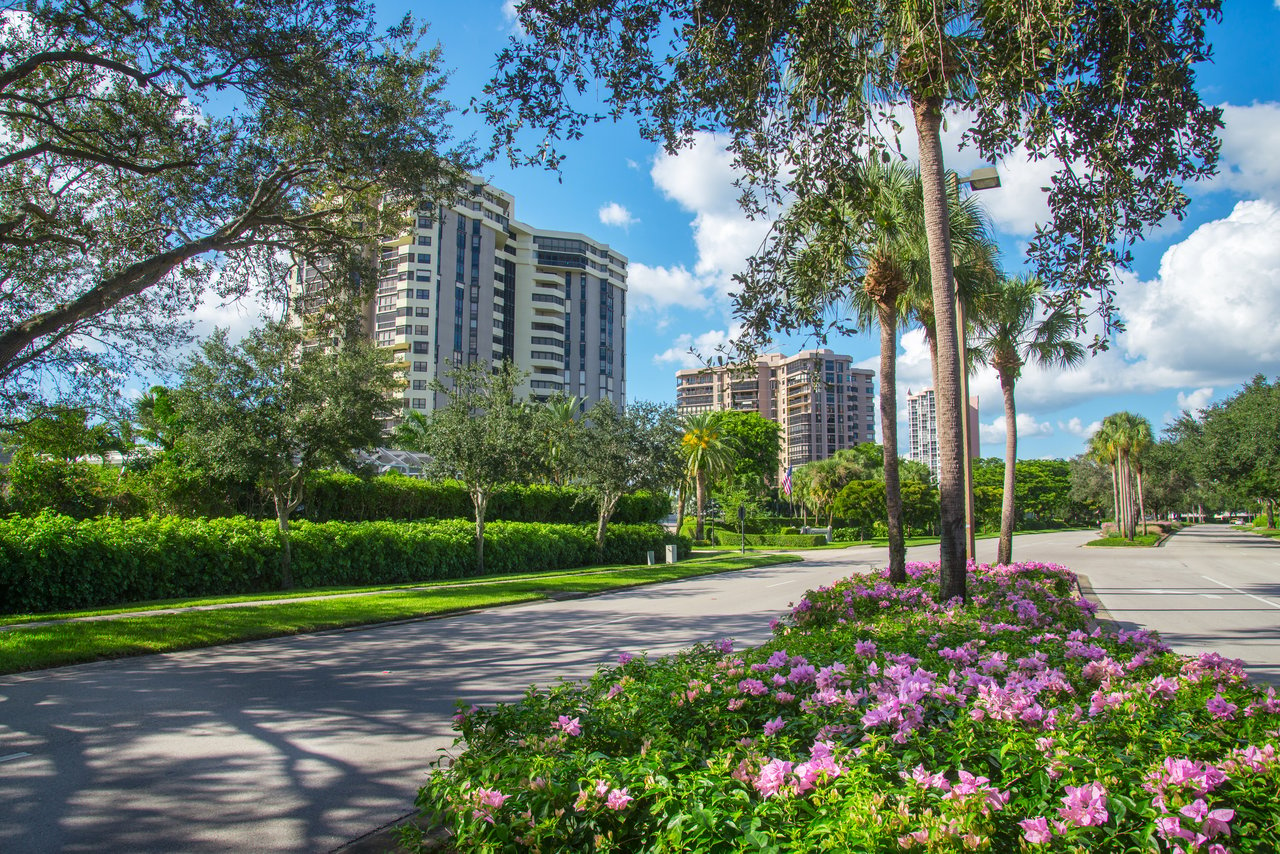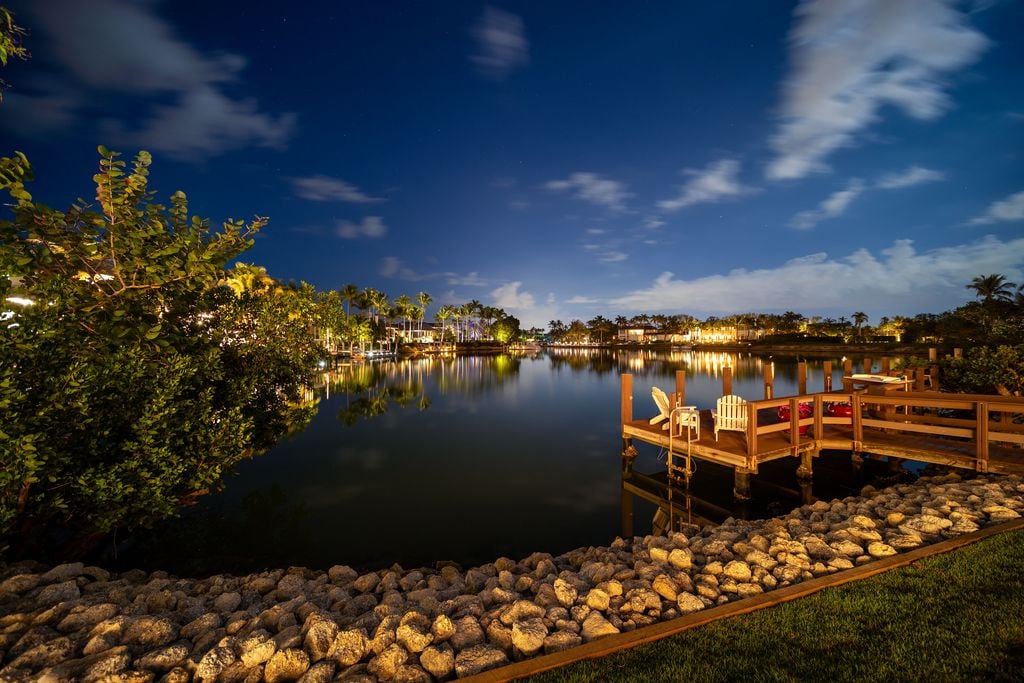
If you love the idea of stepping from your backyard to Naples Bay in minutes, Aqualane Shores and Royal Harbor probably sit high on your list. Both neighborhoods offer true waterfront living near downtown Naples, but they do not function the same way once you start thinking like a boater. If you want to understand canal depth, dock fit, dredging, and the route from your lift to Gordon Pass, this guide will help you compare the details that matter most. Let’s dive in.
Why the Waterway Layout Matters
Aqualane Shores and Royal Harbor both sit on the Naples Bay side of downtown Naples, which means your boating experience is shaped by more than the fact that a home has water behind it. According to the City of Naples Basin IV assessment, Aqualane Shores is a low-lying, primarily residential 208-acre sub-basin, while Royal Harbor is part of the East Naples Bay Special Taxing District.
That matters because these are canal-and-bay neighborhoods. Your day on the water depends on how your specific lot connects to the canal, how that canal connects to Naples Bay, and how easily you can continue out through Gordon Pass.
Naples Bay itself is a relatively narrow, shallow estuary with Gulf access through Gordon Pass. The same City source notes that the bay ranges roughly from 100 to 1,500 feet wide and 1 to 23 feet deep, which is a helpful reminder that not every route or lot offers the same boating flexibility.
Aqualane Shores for Boaters
Aqualane has a tighter canal setup
Aqualane Shores is often appealing because of its close-in location near downtown and the bay. For boaters, though, the neighborhood works best when you look past the address and focus on what your dock configuration can realistically support.
The City of Naples notes that Aqualane Shores is especially sensitive to tides and sea-level rise because runoff drains by gravity into canals and some roads sit only slightly above canal water. That is one reason buyers and owners tend to pay close attention to seawalls, dock height, and lift design in this neighborhood.
Historical depth shows why verification matters
A 1984 Naples Bay area study listed Aqualane Shores I and II at a typical depth of 1.5 meters, or about 5 feet. That is not a current sounding survey, but it gives useful context.
For you as a buyer, the takeaway is simple: a broad “Gulf access” label is not enough. If your boat has meaningful draft, beam, or height considerations, you will want lot-specific due diligence rather than neighborhood-level assumptions.
Dock rules are intentionally narrow
The current City of Naples pier ordinance is explicit about Aqualane Shores. It requires a 7.5-foot side-yard setback for piers, boat lifts, and vessels.
The ordinance also limits the shore-normal projection of a pier to the smaller of 15 feet or 10 percent of the waterway width. For a boat lift or a combined pier-and-lift setup, the cap is the smaller of 25 feet or 25 percent of the waterway width.
In practical terms, Aqualane Shores can be a very attractive boating neighborhood, but the dock envelope is tight. Boat length is only one piece of the puzzle, and beam, lift placement, setbacks, and canal width all play a role in whether a property is truly a fit.
Royal Harbor for Boaters
Royal Harbor benefits from district dredging
Royal Harbor has a different boating profile. It sits within the East Naples Bay Special Taxing District, which the City says exists to improve water quality, navigability, and maintenance dredging in the waterways.
That district-wide framework is important for buyers because navigability is part of the neighborhood conversation, not just an individual-owner issue. City project materials show that the East Naples Bay dredge and rock-removal effort restarted after Hurricane Ian and remains an active capital project.
Budget and project information from the City also notes that canals in the district needed dredging because of silt and rock ledges that impeded safe navigation. For boaters, that makes Royal Harbor especially relevant if long-term canal maintenance is high on your priority list.
Historical depth can vary by canal section
The same 1984 Naples Bay study listed Royal Harbor canals at a typical depth of 1.2 meters, or about 4 feet. Again, this is historical context rather than current hydrographic proof.
Still, it reinforces an important point. Depth can vary materially depending on the canal segment and maintenance history, so lot-by-lot review remains essential.
Interior canals are generally more forgiving
Royal Harbor tends to offer more flexibility on interior canals. Under the pier ordinance, the shore-normal dimension of a pier may not exceed the platted property line, described as 5 feet off the seawall line, and there is no restriction on vessel width or beam for interior canals and waterways.
That does not mean every property works for every boat. It does mean Royal Harbor interior-canal lots may feel more forgiving for wider vessels than what you often see in Aqualane Shores, provided the parcel still complies with the City’s navigation and setback requirements.
Bay-facing lots are more case-specific
Royal Harbor also has a clear difference between interior-canal homes and properties facing Naples Bay or Haldeman Creek. The City ordinance says bay- and creek-facing parcels must account for wake reflection, channel proximity, the shore-parallel shoal, and the existing line of construction.
For you, that means bay-facing exposure can be appealing, but these parcels often deserve more customized review. The boating setup may be less plug-and-play than a standard interior canal lot.
Aqualane Shores vs Royal Harbor
Here is the simplest way to think about the difference.
| Topic | Aqualane Shores | Royal Harbor |
|---|---|---|
| Waterway character | Tight canal neighborhood connected to Naples Bay | Canal system with interior and bay-facing lot variation |
| Historical typical depth | About 5 feet in 1984 study | About 4 feet in 1984 study |
| Dock envelope | More restrictive setbacks and projection caps | More flexible on interior canals |
| Key boating watchpoint | Drainage sensitivity, tides, dock fit | Dredging status, canal segment depth, lot orientation |
| Practical appeal | Strong downtown proximity with careful fit analysis | More forgiving interior canal setup for some boats |
In short, Aqualane Shores is often the more tightly bounded canal option. Royal Harbor may offer a more flexible dock envelope on interior canals, plus the added context of an active dredging framework.
What to Check Before You Buy
If you are shopping either neighborhood with a boat in mind, it helps to review the same core items on every property.
Confirm water depth at the lot
Neighborhood averages and historical studies are useful starting points, but they are not enough for a purchase decision. You should confirm the actual depth at mean low water and review how the route from dock to bay performs at different tide conditions.
The City’s boating guidance within the pier ordinance also recommends using up-to-date nautical charts and taking extra care at low tide. That is especially relevant if your vessel has deeper draft or if you plan to boat regularly year-round.
Measure the dock and lift envelope
Do not assume a dock can be enlarged or reconfigured later without issue. The City ordinance states that no pier may interfere with safe navigation, existing nonconforming structures can be grandfathered, and new piers require a post-construction survey.
A property becomes more practical when the permitted dock envelope already fits your intended boat and lift setup. That can make ownership simpler from day one and may also support stronger long-term usability.
Check air draft and vessel profile
The published rules focus more on canal width, projection, and access than on a single neighborhood-wide bridge-height chart. If your boat has a tower, T-top, or other height needs, verify air draft lot by lot rather than relying on general neighborhood assumptions.
Review the lot’s waterfront position
In Royal Harbor especially, the difference between an interior canal lot and a bay-facing or creek-facing parcel can change the design conversation. In Aqualane Shores, the tighter geometry of the canals can also make lot dimensions more important than buyers first expect.
Marinas, Launches, and Dock-to-Dinner Convenience
One reason both neighborhoods remain so appealing is how quickly you can move from private dock life to downtown Naples amenities.
The Naples City Dock in Crayton Cove offers fuel, pump-out, ice, bait, charter vessels, and transient dockage, and the City says it is minutes from Fifth Avenue South and Third Street South. That makes it a convenient stop for service, guests, or a casual day on the water.
At Naples Bay Resort & Marina, the marina highlights direct Gulf access, deep water, transient slip rentals, and no fixed bridges in the way. If you need added marina support beyond a private dock, that nearby option adds flexibility.
For public launching, Naples Landing Park and Public Boat Launch adds another practical layer to the local boating setup. And if you want a true dock-to-dinner example, The Dock at Crayton Cove puts you right on Naples Bay near the downtown dining corridor.
Which Neighborhood Fits Your Boating Lifestyle?
If you want a close-in waterfront setting near Old Naples and you are comfortable doing careful lot-level review, Aqualane Shores may be a compelling fit. It offers a distinctive canal setting with fast access to Naples Bay, but the dock envelope and drainage sensitivity deserve close attention.
If you want a neighborhood where interior canal lots may offer a bit more flexibility, Royal Harbor often stands out. The active dredging framework and different lot types can create useful options, especially if your boating needs are more specific.
In both neighborhoods, the best waterfront purchase is usually the one where the boat, the dock, and the waterway all align cleanly. That is where local guidance and property-level analysis become especially valuable.
If you are comparing waterfront opportunities in Aqualane Shores or Royal Harbor, The Beachfront Team can help you evaluate canal fit, dock potential, and the neighborhood nuances that shape long-term value. Experience the Beachfront Difference — Schedule a Confidential Consultation.
FAQs
What makes Aqualane Shores different from Royal Harbor for boaters?
- Aqualane Shores generally has a tighter dock envelope and more drainage sensitivity, while Royal Harbor interior canals are often more flexible and benefit from a district-wide dredging framework.
How deep are the canals in Aqualane Shores and Royal Harbor?
- A 1984 Naples Bay study listed typical depths of about 5 feet in Aqualane Shores and about 4 feet in Royal Harbor, but you should verify current lot-specific depth before buying.
Do Royal Harbor homes have easier dock options than Aqualane Shores homes?
- Royal Harbor interior canals may be more forgiving for some dock and vessel configurations because the City ordinance places no restriction on vessel width or beam there, unlike the tighter limitations that apply in Aqualane Shores.
Why should buyers verify dock rules in Aqualane Shores?
- The City requires specific setbacks and limits on pier and lift projection in Aqualane Shores, so a property’s legal dock envelope may affect whether your boat truly fits.
Are Aqualane Shores and Royal Harbor good for quick access to downtown Naples by boat?
- Yes, both neighborhoods benefit from fast access to Naples Bay, nearby marinas, and downtown destinations like Crayton Cove, Fifth Avenue South, and Third Street South.